
Clinical Vignette
Nina is fourteen years old, she was diagnosed with skeletal dysplasia since infancy, and her thoracolumbar curve now measures 112 degrees on a standing radiograph. Her forced vital capacity is 38% of predicted. The spine surgeon reviewing her imaging is clawed by the dilemma, which, in its essence, is a question about time. Correct now and anticipate the neurologic and cardiopulmonary risk of acute correction in a structurally compromised child, or spend weeks preparing her body for what the operation will demand of it.
This is the terrain of pediatric orthopedics. The question isn’t just about intervention or observation, but about the dichotomy between two contrasting philosophies in surgery, heeding the urgency of acute correction or physiological preparation for surgery to make the patient fit. Dr. Pierre Stagnara was one of the pioneers in this field, adapting halo cranial traction to correct scoliosis in the early 1970s. He introduced the central insight that remains operationally valid today. Strategy is built on time for those with severe spine deformity, threatened with intraoperative risks. A kyphoscoliotic spine, if given sufficient traction applied gradually over weeks, will yield, reorient, and reform in ways that the acute intraoperative corrective measure cannot safely achieve. Modern halo gravity traction works on a simple principle—the patient’s own body weight and torque applied at the halo-skull interface provide continuous longitudinal distraction without the hemodynamic and neurological lability of acute intraoperative correction.
Idea behind HGT
This skull halo, perhaps, isn’t just a mechanical device but a physiological prehabilitation for bone, muscle, and lung. HGT operates simultaneously across structural and systemic dimensions, in all 3 axes. Longitudinal distraction gradually elongates the spinal column in the coronal, sagittal, and axial planes, reducing the three-dimensional deformity through progressive soft-tissue creep and ligamentous remodeling. This essentially means HGT makes use of the viscoelastic properties of the pediatric spine. Severe kyphosis restricts chest wall motion; when treated with HGT, this allows the spine to straighten and enables better diaphragmatic excursions. This is especially ameliorating in patients with poor pulmonary function. The correction not only paves the way for body reconditioning but also serves as an entry point for improved mechanical gears, such as MCGR (magnetic-controlled growing rods). What this means is that previously the short-statured patients or those with severe kyphosis who could not opt for MCGR (MCGRs are bulky and difficult to contour) now have a better and less invasive alternative due to pre treatment with HGT, as HGT helps to lenghthen the spine This physiologic prehabilitation reduces intraoperative stress, minimizes stress on future anchor screws, and lessens the need for osteotomies for acute release. A spine that has been gradually elongated over weeks is neurologically more tolerant of further intraoperative correction than one subjected to sudden distraction. The attending neurophysiologist monitoring spinal cord evoked potentials during surgery on a post-HGT patient is working on a more forgiving substrate. Most surgeons make strict demarcations on what patients merit for HGT- typically those with severe, rigid curves, exceeding 90 degrees, resistant to supine flexibility, with special emphasis on patients with respiratory and neuromuscular compromise.
Important Considerations while Placing the Halo Device
A halo device is attached to the skull, preferably below or at the level of the skull equator, to prevent slippage. It is generally agreed that at least 6 pins should be placed directly perpendicular to the skull surface. The distance between the ring and the skull must be less than 1cm at all pin sites to decrease the lever arm torque. Another important consideration is the anatomical placement of pins. The ideal sites are anterolateral and posterolateral, as most lateral sites are injury-prone (thinnest). The anterior portion, although with considerable thickness, risks injuring the supraorbital nerve and frontal sinus.
McIntosh et al. suggested a general rule of setting the torque to 1 in-lb per child, with a maximum of 8 in-lb; however, the reality in the ward is not always ideal. More often than not, these children have metabolic dysfunctions like osteopenia or commonly thin, softer bones; such gross generalizations render such cases as exceptions. Bauer JM et al. suggest that, in such cases, those under five should be pinned first until finger tightness is achieved (tactile feedback), then verified with a torque driver to ensure at least 1.5 in-lb. This is done because torque drivers can sometimes over-tighten suddenly, resulting in complications and penetration.
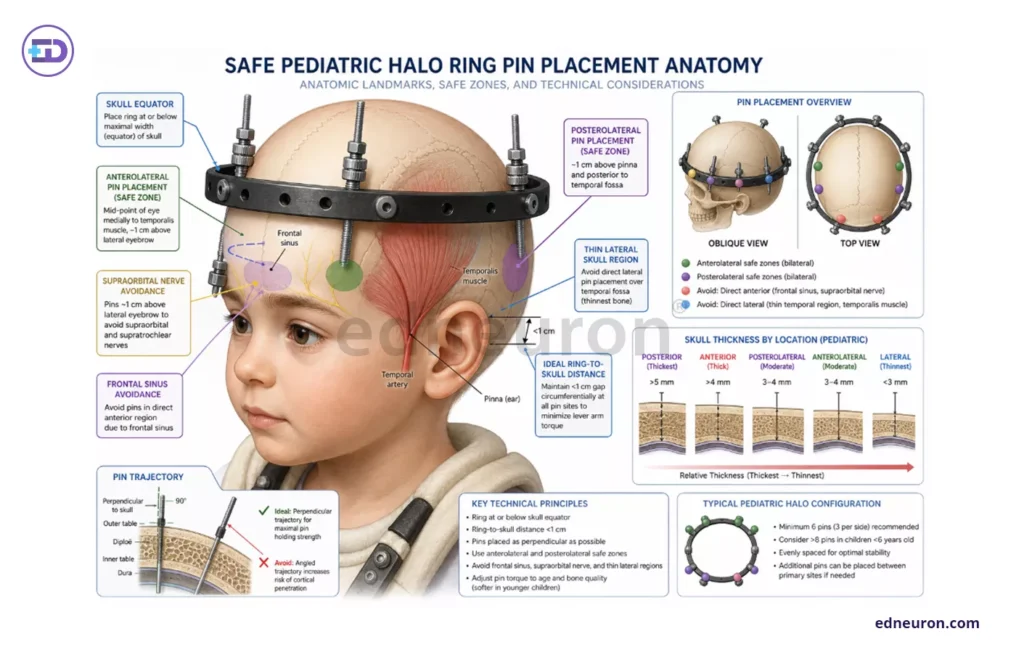
Fig 1 : Visualization of all important takeaways in pediatric halo ring pin placement.
Stepwise Workflow
In Halo gravity traction, we can start post-anesthesia (for awake neuro exam) or intraoperatively with neuromonitoring. A neutral cervical alignment should be maintained during traction.
Traction protocol:
- Start with 5–10 lbs in bed, +2 lbs in wheelchair, +2 lbs in walker
- Gradually increase 1–3 lbs, 1–2× daily
- Target ≈ 50% body weight (wheelchair) over ~2 weeks
- Bed traction is usually limited to ~10% body weight
Clinical endpoint is when the patient becomes “antigravity” (can partially suspend themselves in traction). It is imperative to conduct a neurologic exam 30 min after each weight increase, remove weight if any deficit is documented, and obtain weekly spine and cervical imaging. The typical duration is ~4 weeks (up to 6 weeks for severe deformity), with 12–16 h/day of out-of-bed traction (wheelchair preferred for longer effect), usually done on an inpatient basis. However, selected cases may undergo home traction.
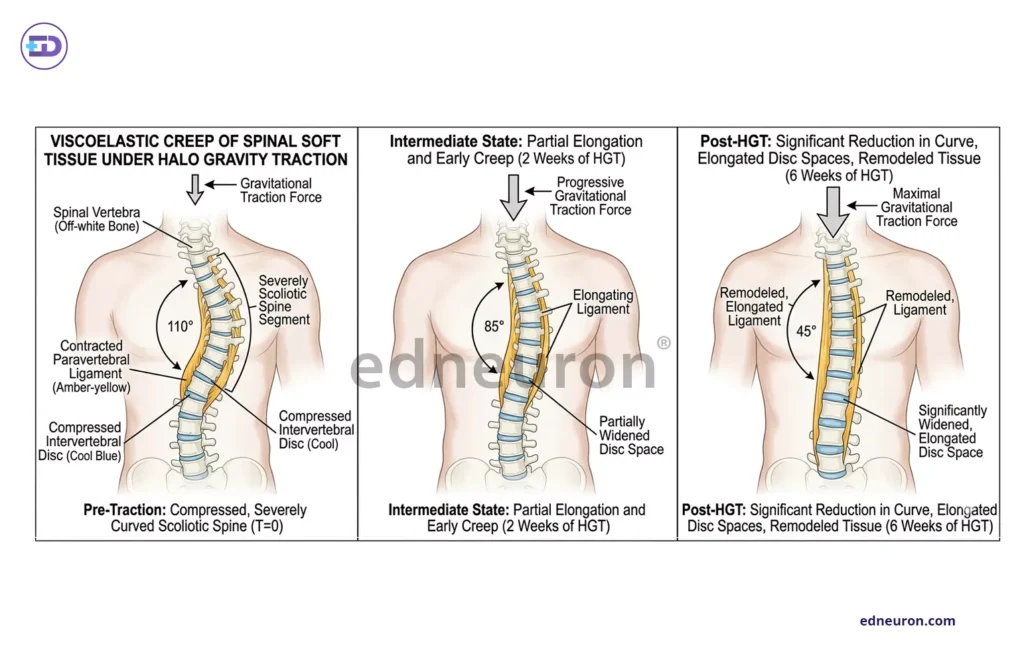
Fig 2 : Longitudinal clinical photography in a patient with weeks of HGT treatment.
What the Evidence Supports and Where It hits a wall
A 2021 systematic review and meta-analysis, pooling seven studies and 189 patients, demonstrated statistically significant reductions in both coronal and sagittal Cobb angles alongside improvement in FVC and FEV1 following preoperative HGT.
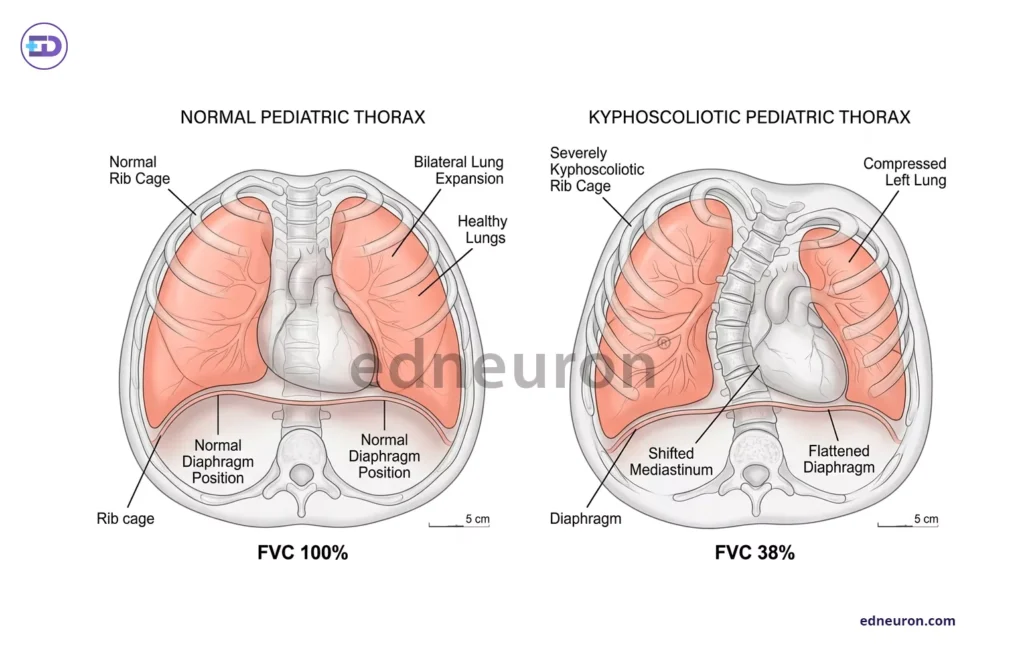
Fig 2 : Illustrative example of how kyphoscoliosis reduces the functional vital capacity in pediatric thorax.
The contemporaneous work on severe stiff deformity showed that HGT could reduce the need for high-risk procedures such as vertebral column resection or three-column osteotomy, operations whose complication rates in compromised patients are formidable. Yet the literature also exposes HGT’s evidential limitations with equal clarity. Sample sizes remain modest across all studies. Protocols are non-standardized and heterogeneous weight-escalation targets, durations, and clinical endpoints vary substantially between institutions. No randomized controlled trial exists, nor is one likely in this patient population.
The Burden the Traction Places on the Patient
Serious adverse events are relatively infrequent in experienced hands, though some common complications are not unknown. Pin-site infection is the most encountered minor complication, followed by cervical pain, dizziness, and transient neurological symptoms. Cranial nerve palsy, particularly abducens nerve paresis producing lateral gaze diplopia represents one of the more clinically significant traction-specific complications. Resolution requires weight reduction but occasionally traction discontinuation. Skull penetration, though rare, is the most feared pin-related complication. The Bauer 2024 review emphasizes that safety depends not on the technique itself but on the vigilance of the monitoring team and that HGT should be delivered in centers with the expertise to promptly identify, grade, and respond to these events.
Conclusion
Halo gravity traction is, at its most precise level, a bridge, an intervention requiring considerate deliberation bartering the urgency of immediate correction for the safety that a prepared spine through HGT offers. For the child whose lungs hang by the precarious thread of postoperative complications or whose spine would require osteotomies that carry neurological risk, HGT becomes operationally necessary. For others, the calculation is less certain. What the evidence cannot provide, and what the clinician must supply, is the judgment about which patient qualifies as one to be at the receiving end. That judgment is not procedural because it is the highest-order clinical reasoning available to the surgeon who chooses to wait, and to the patient whose spine is modulated, slowly and deliberately, to yield.
References
- Bauer JM, Yang S, Yaszay B, Mackenzie WGS. Pediatric Halo Use: Indications, Application, and Potential Complications. J Pediatr Soc North Am. 2024 Oct 11;9:100129. PMID: 40432689.
- McIntosh AL, Ramo BS, Johnston CE. Halo Gravity Traction for Severe Pediatric Spinal Deformity: A Clinical Concepts Review. Spine Deform. 2019 May;7(3):395-403. PMID: 31053309.
- Yang Z, Liu Y, Qi L, Wu S, Li J, Wang Y and Jiang B (2021) Does Preoperative Halo-Gravity Traction Reduce the Degree of Deformity and Improve Pulmonary Function in Severe Scoliosis Patients With Pulmonary Insufficiency? A Systematic Review and Meta-Analysis. Front. Med. 8:767238.

Author: A P
A medical trainee with an emerging focus on translational and clinical research, with interests spanning surgical sciences, neuroscience, pediatrics, and immunology. Her academic trajectory reflects an effort to integrate molecular innovation with clinically relevant disease models, particularly in complex and high-burden conditions. Her research experience includes work in genome engineering, specifically in prime editing, exploring its therapeutic potential in precision medicine. She has also contributed to oncological research examining cholangiocarcinoma with brain metastasis, focusing on its clinical course and diagnostic challenges. In parallel, her work investigating stoma formation as an independent risk factor for acute kidney injury reflects an interest in perioperative and systemic complications. Academically, she has contributed to case-based and review-driven scholarship, including a case reports and interdisciplinary review articles. Her evolving interests in neurology, pediatrics, and immunology reflect a broader inclination toward understanding disease across systems—from molecular mechanisms to clinical outcomes—while maintaining a disciplined, evidence-based approach to patient care. MBBS (MS4) ABVIMS Dr. RML HOSPITAL New Delhi