

Introduction
The doctrine of mens rea, which translates to the “guilty mind”, has dictated criminal liability for centuries, and its application to HIV transmission cases has historically rested on a biological assumption that an HIV-positive individual knowingly engaging in sexual contact poses a meaningful transmission risk, but this, in the era of Undetectable = Untransmittable (U=U): a person living with HIV who is on treatment and maintains an undetectable viral load has zero risk of transmitting HIV to their sexual partners, is now substantially undermined by molecular medicine, which demands forensic reexamination.
The Scientific Foundation of U=U
CDC now reports that the patients treated robustly with antiretroviral therapy (ART), which reduces plasma HIV-1 RNA to levels below the threshold value RNA <200 copies/mL, a state termed durable viral suppression, have zero risk of transmission via the sexual route, a position formally endorsed by UNAIDS and the International AIDS Society. The basis for transmission prevention by suppression is now unambiguous; this is what we term as TasP (treatment as prevention). HPTN 052 documents enrollment of 1763 serodistinct couples, in whom early ART initiation dramatically reduces linked sexual transmission in serodiscordant couples. Partners were followed for 8509 person-years, wherein the study documented HIV-1 infections in partners at an incidence of 0.9% (95% confidence interval [CI], 0.7 to 1.1) (36% were found to be unlinked, indexed participant unlikely to be the source of partners infection-0.3%; 95% CI, 0.2 to 0.4). The PARTNER studies, accumulating thousands of couple-years of unprotected sex, recorded zero phylogenetically linked transmissions when the HIV-positive partner maintained suppression below 200 RNA copies per ml (95% CI limit of 0·23 per 100 couple-years of follow-up), including, critically, in male-male couples, indicating that the risk of HIV transmission when HIV viral load is suppressed effectively is zero for both anal and vaginal sex. The Opposites Attract trial independently confirmed this finding in MSM partnerships. This proves that the biological premise of criminalization, exposure to a significant transmission risk, is thus not merely attenuated; under durable suppression, it is absent.
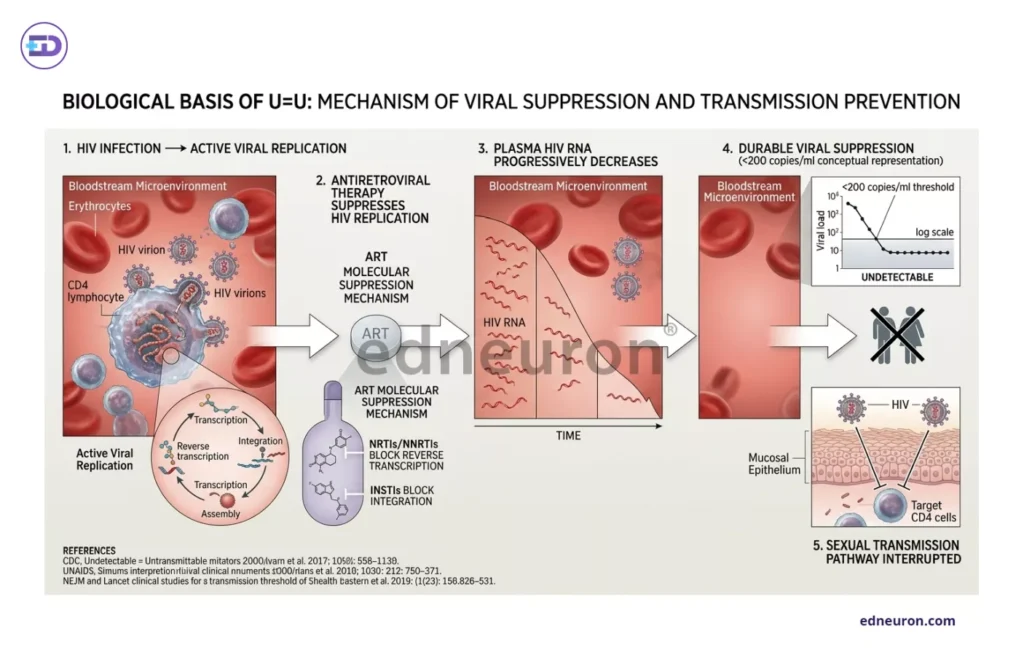
Fig 1 : Illustrative representation of understanding how strict adherence to ART results in durable suppression with transmission levels to near zero.
Mens Rea and the Discordance Between Law and Medicine
To establish grounds of legal criminality in HIV transmission, on claims of recklessness or negligence, must be predicated on facts that indicate genuine volition and risk of harm. A defense of conscious disregard for risk of transmission/ intent to harm falters if the defender maintains/durable viral suppression, unmissed ART, and low RNA copies (below threshold). The inference of intent to harm cannot be corroborated on medical grounds in such cases. The duty then falls on the judicial system to prevent unjust convictions or prosecutions when the “substantial element” of recklessness dissolves. The Expert Consensus Statement (2018)(Barré-Sinoussi F et al.) on the science of HIV in the context of criminal law, co-authored by leading scientists across the world, including lawyers, virologists, and epidemiologists, explicitly holds the opinion that status-based criminal liability, triggered by serological diagnosis rather than actual infectiousness of the disease, conflates a single indexed individual with culpable conduct in the legal system outrun by molecular medicine. In such cases, negligence arguments only hold or retain any rationality and legal meaning when found in circumstances of documented viremia, nonadherence to ART, acute infection, or proof of deliberate intent to transmit despite suppression.
Forensic Limitations: Phylogenetics and Source Attribution
Courts have increasingly accepted HIV phylogenetic analysis (the study of the degree of relatedness between HIV genetic sequences) as evidence of transmission. This warrants caution to establish causality, but can be used to exonerate the accused when it is proven that the viral strain transmitted is unrelated. Phylogenetic similarity demonstrates evolutionary clustering between viral sequences, but it does not establish that one individual directly infected another. It majorly comes down to ruling out other factors that could perhaps be involved at any stage in the transmission chain. Unsampled intermediaries, within-host viral diversity, convergent evolution, and timing uncertainty each independently prohibit such an inference. The forensic review by Bernard et al. identified these limitations, and the Expert Consensus 2018 assertively supported that phylogenetic analysis cannot be used as a standalone evidentiary tool to prove the source or direction of transmission in an individual criminal case. When the analysis results point to unrelatedness, it becomes evidence on which the accused can be exonerated, but when some relation is established, even with the best controls, it may be impossible to definitively come to a conclusion about the linearity of transmission. Its proper forensic role is inferential, useful for population-level epidemiology, and ill-suited for use as proof against an individual beyond a reasonable doubt.
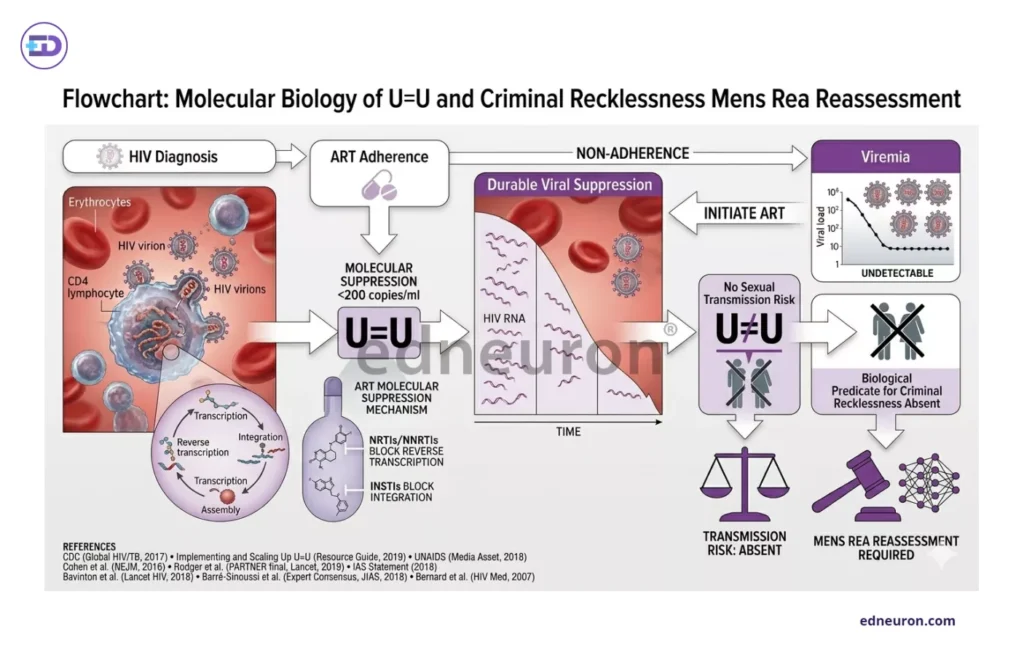
Fig 2 : When the defendant is found to have RNA copies above threshold, disruption in ART, then it becomes imperative to critically assess the mens rea to ensure a justified decision is made.
Ethical and Public Health
Criminalization sown by virtue of just the existence of a disease rather than its infectiousness amplifies stigma a thousandfold, deters HIV testing, and reduces compliance to the treatment upon which the TasP and concept of U=U depend. It should not be shocking to realize that regions exercising broad criminalization correlate with worse HIV knowledge, lower testing rates, inferior viral suppression outcomes, and, as Susan Sontag says, become the very niche for breeding apprehension not only in the people around but also within the patient. Countries where laws continue to penalize and convict individuals, in whom it is rendered that the risk of transmission is negligible, and freezing any health-seeking behavior that might potentially prevent new infections. UNAIDS explicitly discourages criminalization based on HIV status alone, labeling such laws as a structural impediment to the epidemic response.
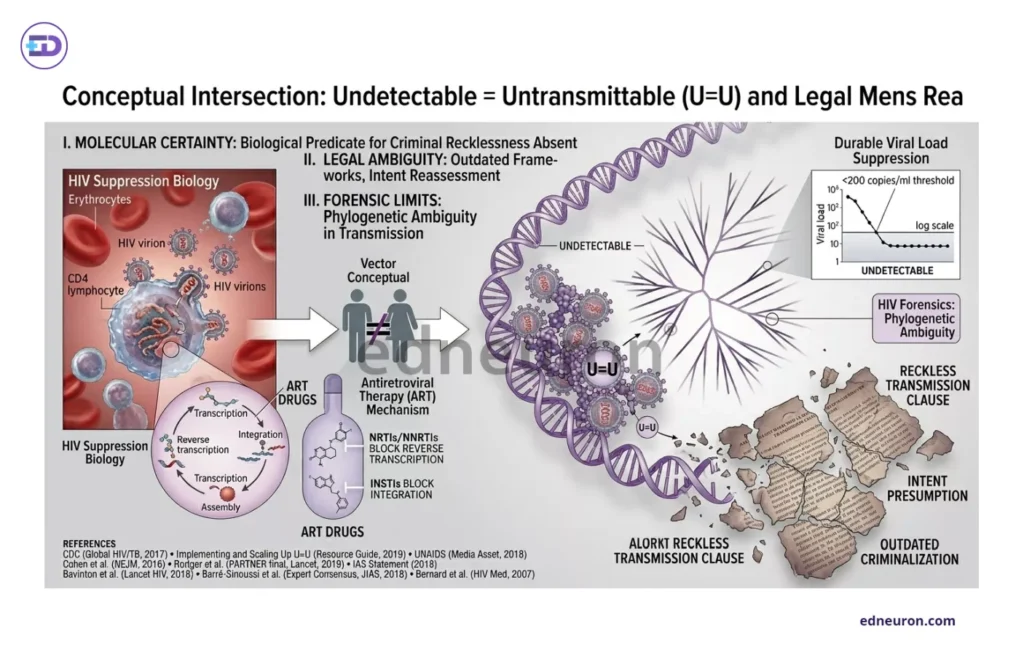
Fig 3 : Illustrative presentation on how molecular medicine outruns law.
Conclusion
Criminal law is a normative instrument that is not obligated to track molecular biology in real time, but must be obligated to be coherent. When the factual predicate of culpable conduct, “a meaningful transmission risk”, is eliminated by therapeutic intervention, the mens rea framework demands recalibration. An undetectable viral load is not some kind of moral absolution, but in the absence of viremia and the awareness of it, deliberate deception (application of criminal exposure statutes) constitutes liability untethered from biological reality. As molecular medicine continues on its journey to discover and redefine the complexities of HIV infectiousness, the question that confronts legislatures, courts, and forensic experts alike is whether criminal doctrine will evolve to reflect what science now knows or persist as an incorrigible artifact of an era it has already outlived.
References
- CDC. Undetectable = Untransmittable. CDC page- https://www.cdc.gov/global-hiv-tb/php/our-approach/undetectable-untransmittable.html
- Implementing and Scaling Up Undetectable = Untransmittable (U=U) Implementing and Scaling Up U=U: A Comprehensive Resource Guide for Healthcare Professionals
- UNAIDS. Undetectable = Untransmittable: Public Health and HIV Viral Load Suppression. https://www.unaids.org/sites/default/files/media_asset/undetectable-untransmittable_en.pdf
- Cohen MS, Chen YQ, McCauley M, et al. Antiretroviral Therapy for the Prevention of HIV-1 Transmission. N Engl J Med. 2016 Sep 1;375(9):830-9. PMID: 27424812.
- Rodger AJ, Cambiano V, Bruun T, et al. Risk of HIV transmission through condomless sex in serodifferent gay couples with the HIV-positive partner taking suppressive antiretroviral therapy (PARTNER): final results of a multicentre, prospective, observational study. Lancet. 2019 Jun 15;393(10189):2428-2438. PMID: 31056293.
- IAS. IAS Statement on U=U: Putting the Science into Action.
- Bavinton BR, Pinto AN, Phanuphak N, et al. Viral suppression and HIV transmission in serodiscordant male couples: an international, prospective, observational, cohort study. Lancet HIV. 2018 Aug;5(8):e438-e447. PMID: 30025681.
- Barré-Sinoussi F, Abdool Karim SS, Albert J, et al. Expert consensus statement on the science of HIV in the context of criminal law. J Int AIDS Soc. 2018 Jul;21(7):e25161. PMID: 30044059.
- Bernard, E., Azad, Y., Vandamme, A., Weait, M. and Geretti, A. (2007), HIV forensics: pitfalls and acceptable standards in the use of phylogenetic analysis as evidence in criminal investigations of HIV transmission*. HIV Medicine, 8: 382-387. https://doi.org/10.1111/j.1468-1293.2007.00486.x

Author: A P
A medical trainee with an emerging focus on translational and clinical research, with interests spanning surgical sciences, neuroscience, pediatrics, and immunology. Her academic trajectory reflects an effort to integrate molecular innovation with clinically relevant disease models, particularly in complex and high-burden conditions. Her research experience includes work in genome engineering, specifically in prime editing, exploring its therapeutic potential in precision medicine. She has also contributed to oncological research examining cholangiocarcinoma with brain metastasis, focusing on its clinical course and diagnostic challenges. In parallel, her work investigating stoma formation as an independent risk factor for acute kidney injury reflects an interest in perioperative and systemic complications. Academically, she has contributed to case-based and review-driven scholarship, including a case reports and interdisciplinary review articles. Her evolving interests in neurology, pediatrics, and immunology reflect a broader inclination toward understanding disease across systems—from molecular mechanisms to clinical outcomes—while maintaining a disciplined, evidence-based approach to patient care. MBBS (MS4) ABVIMS Dr. RML HOSPITAL New Delhi