
Introduction
A 34-year-old woman presents with a history of dysuria and urinary frequency for the last three weeks. Dipstick urinalysis: positive for leukocyte esterase and positive nitrites. Microscopy confirms more than 10 white blood cells per high-power field. Yet her urine culture, processed under standard conditions after a course of empiric trimethoprim-sulfamethoxazole, returns with no growth. She has been treated, yet she has not improved, and the laboratory offers no organism to blame. This clinical scenario defines sterile pyuria: where there is the presence of significant pyuria (more than 10 WBC/mm^3, unspun urine with more than 3 WBC per high power field (WBC/HPF), or a urine dipstick analysis showing leukocyte esterase or nitrites), in the absence of any significant culture growth. A clinician must always remember that sterile pyuria is a finding, not a diagnosis. It may reflect:
- Partially treated or culture-resistant infection
- An unrecognized sexually transmitted infection (STI)
- Genitourinary tuberculosis (GU TB)
- Systemic inflammatory disease
- Drug-induced interstitial nephritis, or even nothing more than a sampling artifact.
The clinician who thinks sterile pyuria is synonymous with UTI risks jumping to conclusions where real pathology is yet to be identified.
Clinical Reasoning and Differential Diagnosis
One easy way to make a clear distinction in cases of sterile pyuria is to approach it from infectious and non-infectious causes.
- A partially treated or prior antibiotic-suppressed UTI is the most common cause of sterile pyuria, and we know that antimicrobials are among the most important confounders of microbiologic interpretation: they produce negative cultures without resolving tissue-level inflammation.
- Chlamydia trachomatis and Neisseria gonorrhoeae are deemed worthy considerations, especially if the patient is a young, sexually active adolescent, as reaffirmed by a 2018 retrospective study by Shipman SB et al., which demonstrated that sterile pyuria was present in 74% of patients with confirmed STIs, indicating that pyuria alone cannot distinguish classical UTI from urethritis or cervicitis due to these pathogens. Moreover, a positive dipstick for nitrites was an unreliable predictor of UTI, and a nitrite-positive dipstick was 18% more likely to be associated with sterile pyuria and negative cultures in these STI-positive patients.
- In TB-endemic regions, including India, genitourinary tuberculosis presents insidiously with non-specific symptoms of pain, urgency, and dysuria, often with chronic sterile pyuria, haematuria, and obstructive uropathy, and remains one of the most commonly missed diagnoses in this context, probably because of a lack of awareness by clinicians. It is also worth mentioning that when diabetic patients with new-onset proteinuria complain of urinary symptoms, a holistic screening for GU-TB must be mandated.
- Among the non-infectious causes, which are equally important and frequently overlooked, drug-induced acute interstitial nephritis (AIN), associated with proton-pump inhibitors (PPIs) and NSAIDs, can produce sterile pyuria, eosinophiluria, and renal impairment without any infectious insult.
- Systemic inflammatory conditions, including systemic lupus erythematosus, Kawasaki disease, and interstitial cystitis, as well as urinary tract malignancy, round out the non-infectious differential. A retrospective cohort study by Jeon BJ et al. 2020 found preoperative sterile pyuria to be a prognostic marker for intravesical recurrence in upper urinary tract urothelial carcinoma, underscoring malignancy-associated inflammation as a clinically meaningful cause.
- A third category of false sterile pyuria deserves equal attention. Mechanical errors like contamination, improper specimen collection, and prior antiseptic cleansing without properly instructing patients on how to collect the sample can all produce a falsely negative culture. Repeat midstream urine culture, ideally obtained before initiating antimicrobials, is a simple and often decisive first step.

Fig 1 : Comparative panel describing various histopathological differentials of sterile pyuria.
Diagnostic Challenges
Standard urine culture is an imperfect test- optimized for facultative anaerobes growing under aerobic conditions; fastidious organisms such as Chlamydia, Mycoplasma, and Ureaplasma are not detected by it, and such a test renders the patient without a definite diagnosis. Advances in molecular technology and PCR can uncover these pathogens in culture-negative pyuria samples, unveiling pathogens in negative urine culture. For GU TB, three consecutive early-morning urine AFB cultures are needed as the bacteria are intermittently shed. Acidity of urine retards the growth of mycobacteria, and urine PCR for Mycobacterium tuberculosis should be requested whenever sterile pyuria is persistent, accompanied by haematuria, or occurs in a patient from an endemic background, a presentation of calcified granulations that often mimics as nephrolithiasis or non-specific urinary symptoms. Such cases are also greatly complemented by imaging techniques: ultrasound may reveal moth-eaten renal calyceal abnormalities, ureteral strictures, or bladder wall thickening, consistent with GU TB. CT urography is the preferred modality when malignancy or structural pathology is suspected.
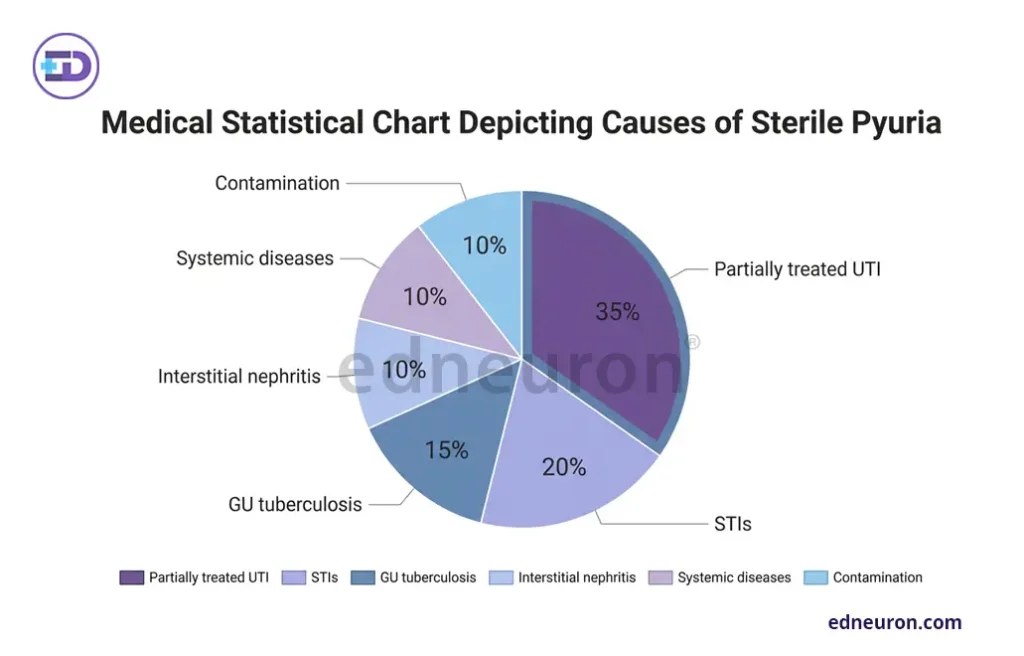
Fig 2 : Pie chart depicting various etiologies of sterile pyuria
Case-Based Decision Points
Good history-taking is indispensable when constructing a successful diagnostic framework, with essential components including a comprehensive history, demographics, medical and drug history, and a detailed outline of the trajectory of renal function.
- In a young, sexually active patient with sterile pyuria and urethral discharge, empirical treatment for STIs along with concurrent NAAT testing should perhaps be the first step, as antibiotics directed at conventional uropathogens are likely to fail.
- In a middle-aged patient on a PPI with rising creatinine and sterile pyuria, the medication history becomes the pivot: discontinuing the suspected agent and monitoring renal recovery or proceeding to biopsy is more appropriate than repeated courses of antibiotics.
- In a patient from a high-burden TB region with months of symptoms, fever, weight loss, night sweats, or haematuria, empiric observation is insufficient; a structured mycobacterial workup and urology referral are mandated.
The risk of premature diagnostic closure, committing to a single explanation before excluding others, is the central hazard in managing sterile pyuria. Multiple etiologies may co-exist, and an incomplete workup may be more dangerous than the condition itself.

Fig 3 : Stepwise evaluation strategy of sterile pyuria.
Modern Insights
Emerging evidence challenges the very concept of a ‘sterile’ urinary tract. Next-generation sequencing of the urinary microflora has identified diverse microbial communities in samples previously found to be culture-negative. What this suggests is a more epistemic interpretation, in which such negative culture reflects something in the urinary microenvironment that standard culture simply cannot detect. Conversely, the expanding availability of broad-spectrum molecular panels introduces the risk of overdiagnosis: detecting low-level organisms of uncertain pathogenicity may prompt treatment in the absence of true disease. Clinical correlation must anchor molecular findings.
Conclusion
Sterile pyuria is a signal, one that may represent infection, inflammation, or illusion, depending on context. Such an ambiguous entity as sterile pyuria demands a structured, stepwise, and epidemiologically informed approach:
- Repeating the culture (especially for GU-TB)
- Exclude any scope of contamination (instructing patients for proper mid-stream, clean catch sample collection)
- Screen for STIs, consider GU TB in endemic populations,
- Reviewing the drug history robustly
- Pursue imaging or biopsy when the clinical circumstance warrants.
The error one clinician must avoid is the premature closure of a case by pinning it to a false diagnosis. A clinician who encounters persistent sterile pyuria refractory to conventional treatment must resist the temptation to re-treat empirically and instead ask the harder question: what am I not yet looking for?
References
- Sherchan R, Hamill R. Sterile Pyuria. [Updated 2024 Aug 12]. In: StatPearls [Internet]. Treasure Island (FL): StatPearls Publishing; 2026 Jan.
- Bendig DW. The Differential Diagnosis of Sterile Pyuria in Pediatric Patients: A Review. Glob Pediatr Health. 2021 May PMID: 34017902.
- Shipman SB, Risinger CR, Evans CM, Gilbertson CD, Hogan DE. High Prevalence of Sterile Pyuria in the Setting of Sexually Transmitted Infection in Women Presenting to an Emergency Department. West J Emerg Med. 2018 Mar PMID: 29560055.
- A case of sterile pyuria caused by urological tuberculosis. HK Pract. 2022;44.
- Jeon BJ, Tae BS, Choi H et al. Preoperative sterile pyuria as a prognostic biomarker for intravesical recurrence in upper urinary tract urothelial carcinoma. Investig Clin Urol. 2020 Jan. PMID: 31942463.
- Wong N, Hoag NA, Jones EC, Rowley A, McLoughlin MG, Paterson RF. Genitourinary tuberculosis masquerading as a ureteral calculus. Can Urol Assoc J. 2013 May-Jun PMID: 23766841.

Author: A P
A medical trainee with an emerging focus on translational and clinical research, with interests spanning surgical sciences, neuroscience, pediatrics, and immunology. Her academic trajectory reflects an effort to integrate molecular innovation with clinically relevant disease models, particularly in complex and high-burden conditions. Her research experience includes work in genome engineering, specifically in prime editing, exploring its therapeutic potential in precision medicine. She has also contributed to oncological research examining cholangiocarcinoma with brain metastasis, focusing on its clinical course and diagnostic challenges. In parallel, her work investigating stoma formation as an independent risk factor for acute kidney injury reflects an interest in perioperative and systemic complications. Academically, she has contributed to case-based and review-driven scholarship, including a case reports and interdisciplinary review articles. Her evolving interests in neurology, pediatrics, and immunology reflect a broader inclination toward understanding disease across systems—from molecular mechanisms to clinical outcomes—while maintaining a disciplined, evidence-based approach to patient care. MBBS (MS4) ABVIMS Dr. RML HOSPITAL New Delhi