


Introduction
Even with better mining technology and stricter workplace rules, pneumoconiosis still threatens public health worldwide. In 2017, there were over 600,000 new cases. The disease has also returned in wealthy countries like the United States and Australia, mainly because of new jobs such as artificial stone work and denim sandblasting.
Epidemiology and the Burden of Re-emergence
The way pneumoconiosis appears in patients is changing. While coal workers’ pneumoconiosis and silicosis are still common, silicosis from artificial stone exposure stands out because it develops quickly and shows fast changes on scans.
- Global Incidence: Approximately 527,500 prevalent cases globally.
- China Context: As of 2021, reported cases reached 951,000, with occupational lung disease accounting for roughly 88% of all national occupational diagnoses.
- Mortality: High-level mortality persists, with over 21,000 deaths annually since 2015.
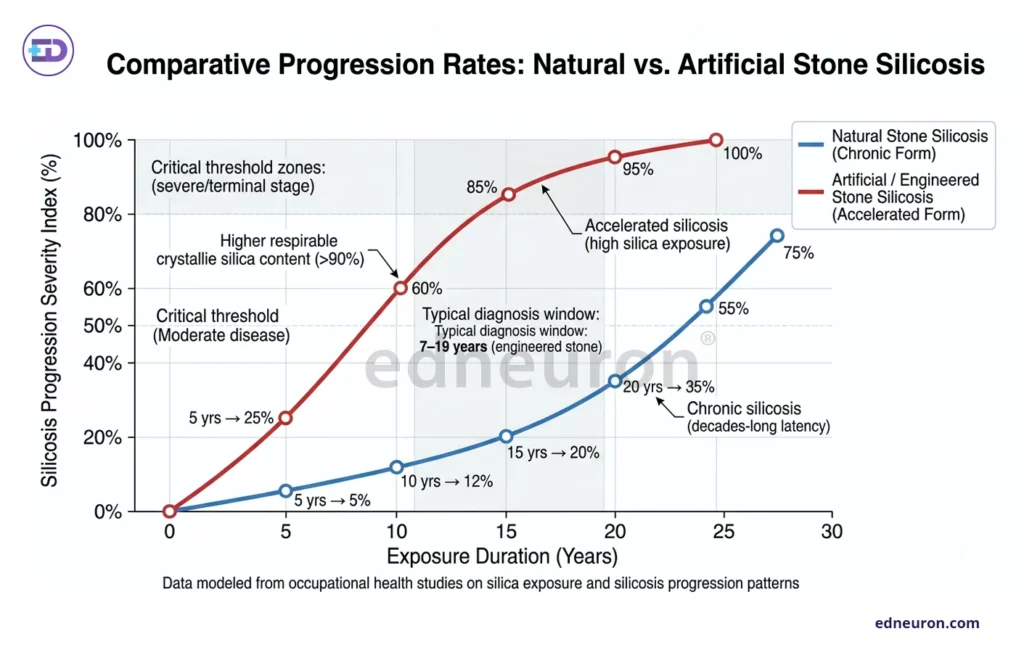
Fig 1: An epidemiological chart comparing the faster progression of artificial stone silicosis (accelerated) with natural stone silicosis (chronic).
Molecular Pathogenesis: Beyond Dust Retention
Pneumoconiosis is not just about dust building up in the lungs. It also triggers an active inflammatory response. Tiny particles under 5µm reach deep into the lungs, where immune cells called alveolar macrophages take them in using the MARCO receptor.
- When these immune cells digest the particles, certain reactions can weaken and break the membranes of their lysosomes.
- This damage triggers the release of enzymes that activate the NLRP3 inflammasome. As a result, the body releases pro-inflammatory cytokines, such as TNF-α, IL-1β, and TGF-β.
- Fibrotic Signaling: Chronic signaling induces epithelial-mesenchymal transition (EMT) and activates fibroblasts through the CD44-RhoA-YAP pathway, leading to irreversible collagen deposition.
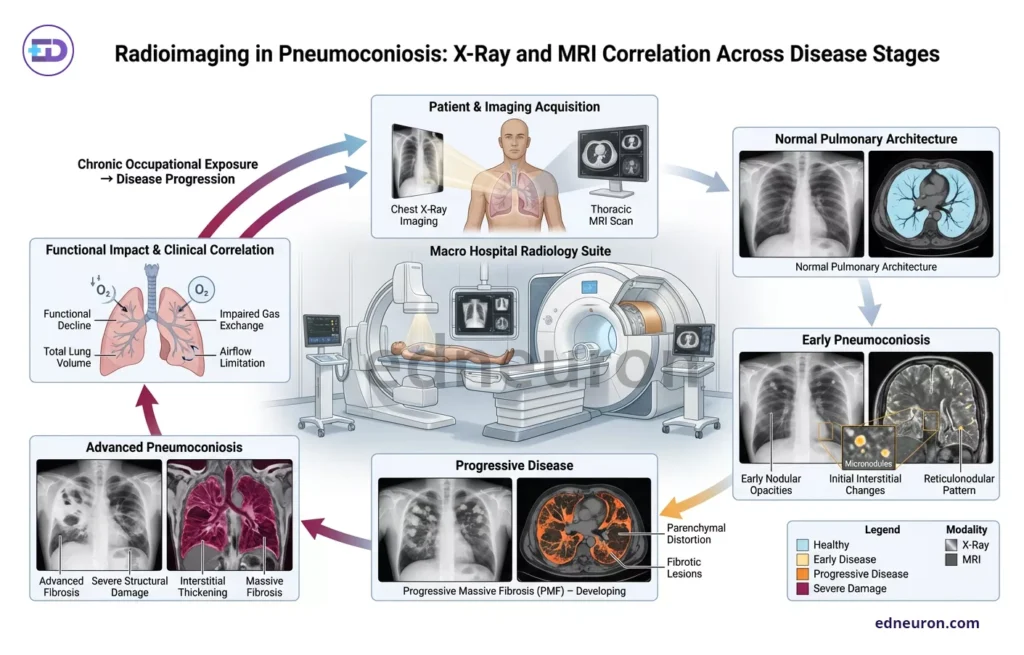
Fig 2: Disease staging and development monitored by radioimaging and radiological assay.
The Systemic Comorbidity Spectrum
Doctors now see pneumoconiosis as a disease that affects more than just the lungs. Ongoing inflammation and low oxygen levels can cause serious problems in other parts of the body:
- Cardiovascular: Patients face a 1.40-fold higher risk of congestive heart failure and an increased incidence of acute myocardial infarction (4.33 vs. 3.23 per 1000 person-years).
- Cerebrovascular: The hazard ratio for ischemic stroke is 1.36 times higher than in non-pneumoconiosis cohorts, likely due to impaired fibrinolytic capacity and systemic inflammation.
- Renal: The overall incidence of chronic kidney disease (CKD) is 1.69-fold higher in affected populations.
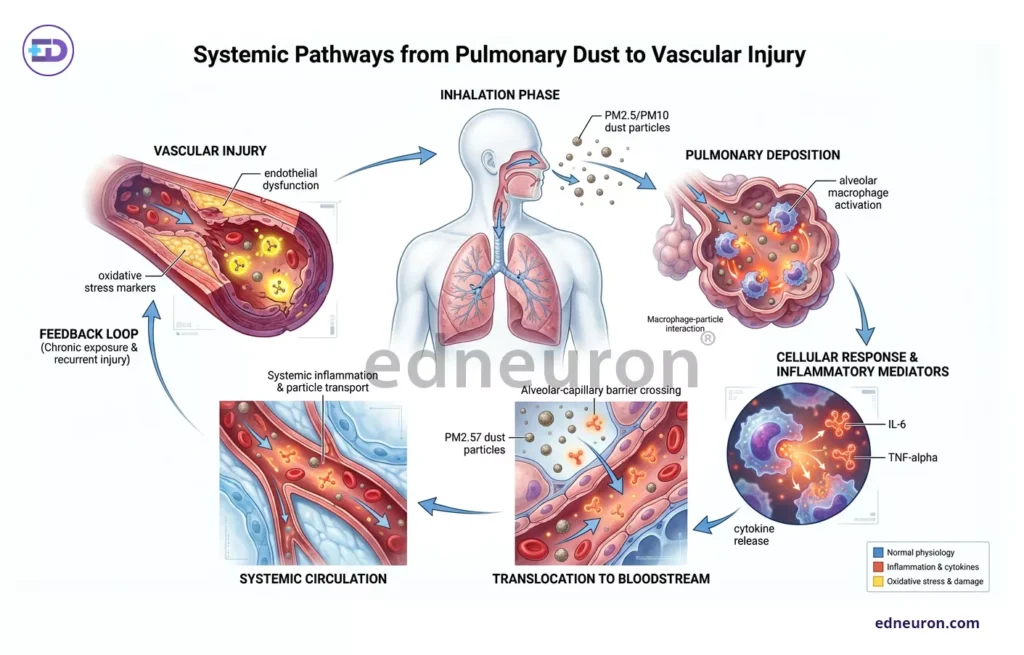
Fig 2: The cycle shows the pathophysiology of pneumoconiosis leading to severe pulmonary-vascular injury.
Diagnostic and Therapeutic Frontiers
Standard screening continues to rely on International Labor Organization (ILO) chest radiography and pulmonary function tests (PFTs). Electrical Impedance Tomography (EIT) is emerging as a non-invasive modality capable of detecting subclinical changes in cellular conductivity prior to the appearance of radiological abnormalities.
Current therapeutic approaches are primarily supportive and include Whole Lung Lavage (WLL) and pulmonary rehabilitation. Novel interventions, such as Mesenchymal Stem Cell (MSC) therapy and Hepatocyte Growth Factor (HGF) administration, have shown promise in early trials for reducing fibroblastic activity and promoting tissue repair.
Clinical Takeaway
Pneumoconiosis is a long-lasting and incurable disease, but it can be completely prevented. Clinicians should always consider possible workplace exposure in patients with heart or autoimmune conditions, as hidden dust exposure is often a contributing factor.
References
- Qi, X.-M., Luo, Y., Song, M.-Y., Liu, Y., Shu, T., Liu, Y., Pang, J.-L., Wang, J., & Wang, C. (2021).
Pneumoconiosis: Current status and future prospects.
Chinese Medical Journal, 134(8), 898–907. - Wang, H., et al. (2024).
A comprehensive retrospect on current perspectives and future prospects of pneumoconiosis.
Frontiers in Public Health, 12. - Yang, X., et al. (2025).
Pneumoconiosis and chronic diseases: A narrative review.
Frontiers in Medicine / PMC - Li, M., et al. (2019).
Pulmonary rehabilitation for pneumoconiosis: Protocol for a systematic review and meta-analysis.
BMJ Open, 9(8), e030589.

Author: A D
A surgically inclined medical trainee with a growing interest in brain, spine, and cardiothoracic systems, aspiring to build a career in advanced operative care. He aims to become a patient-centered surgeon who integrates evolving medical technologies with precise clinical judgment. With a strong foundation in surgical sciences, he has gained clinical exposure through case postings involving breast pathologies, chronic ulcers, and diabetic foot, along with observational experience in hernia repair, appendectomy, and cholecystectomy. Academically, he has assisted research work on breast cancer and developed a case report on a complicated hernia surgery, alongside contributing multiple review articles across disciplines. He is currently engaged in ongoing research exploring the role of nutrition in health and disease. MBBS (MS4) GMC Nagpur, India